TrueDynamic
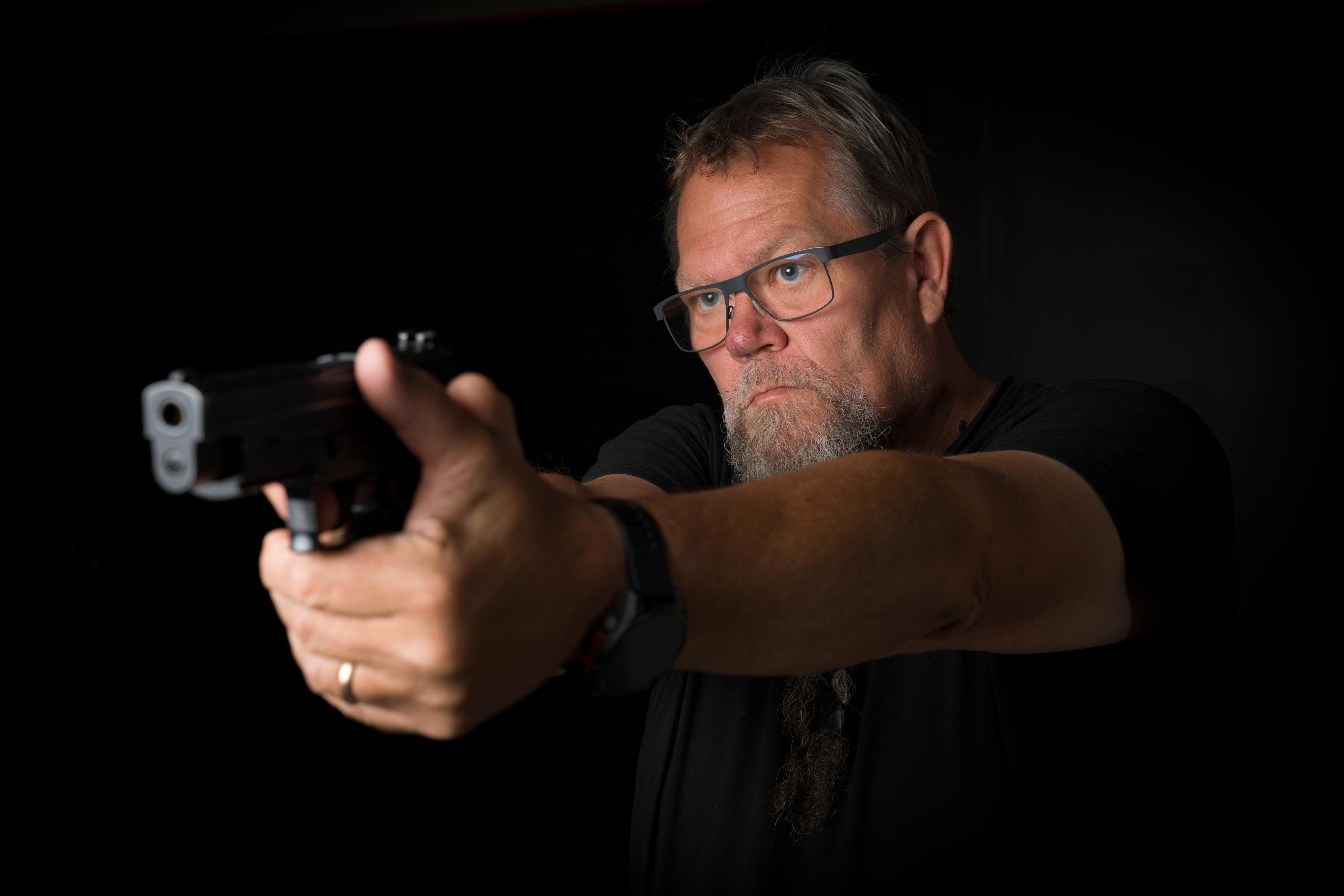
Tiro dinamico, simulato. Costruito sul motore TrueClays.
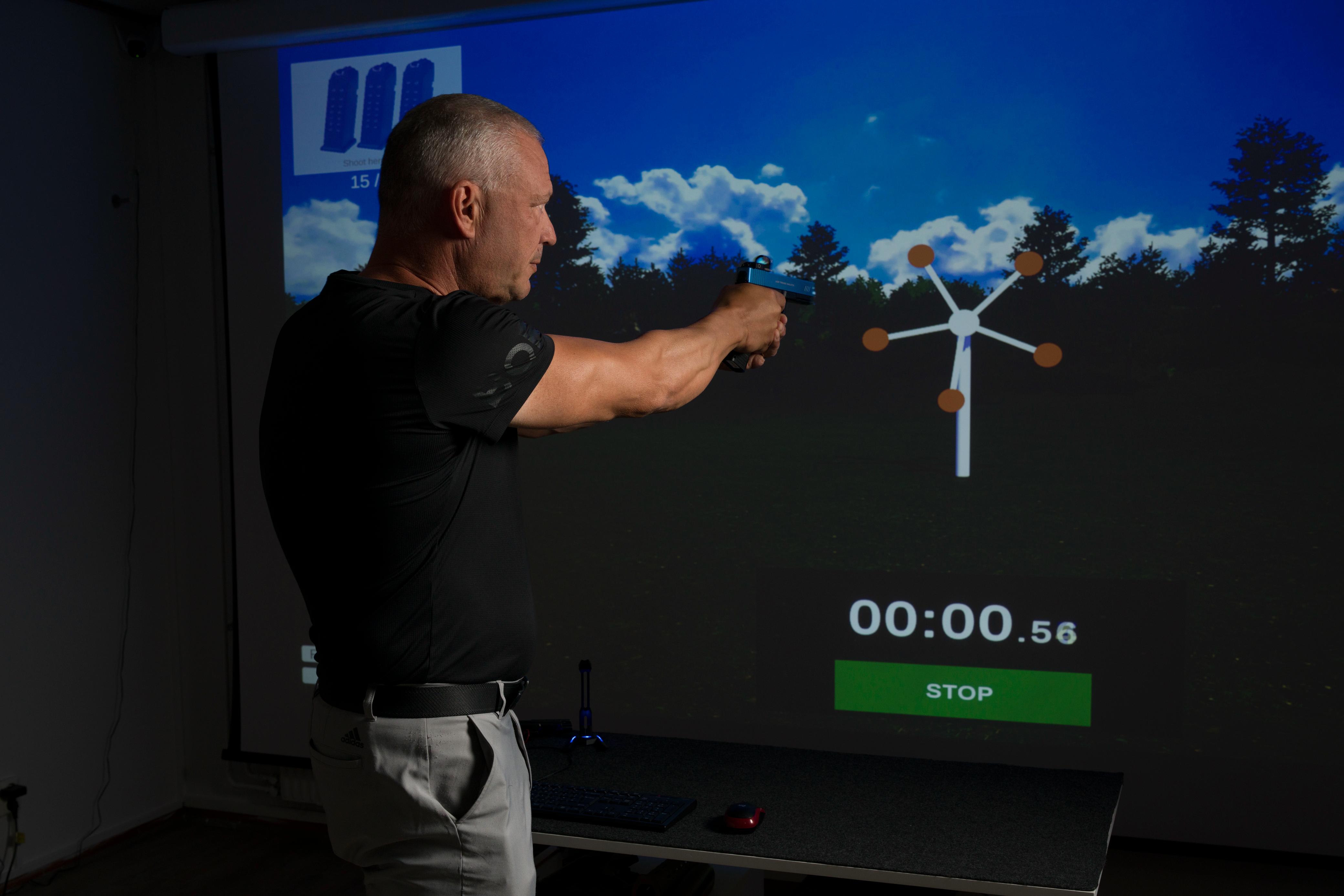
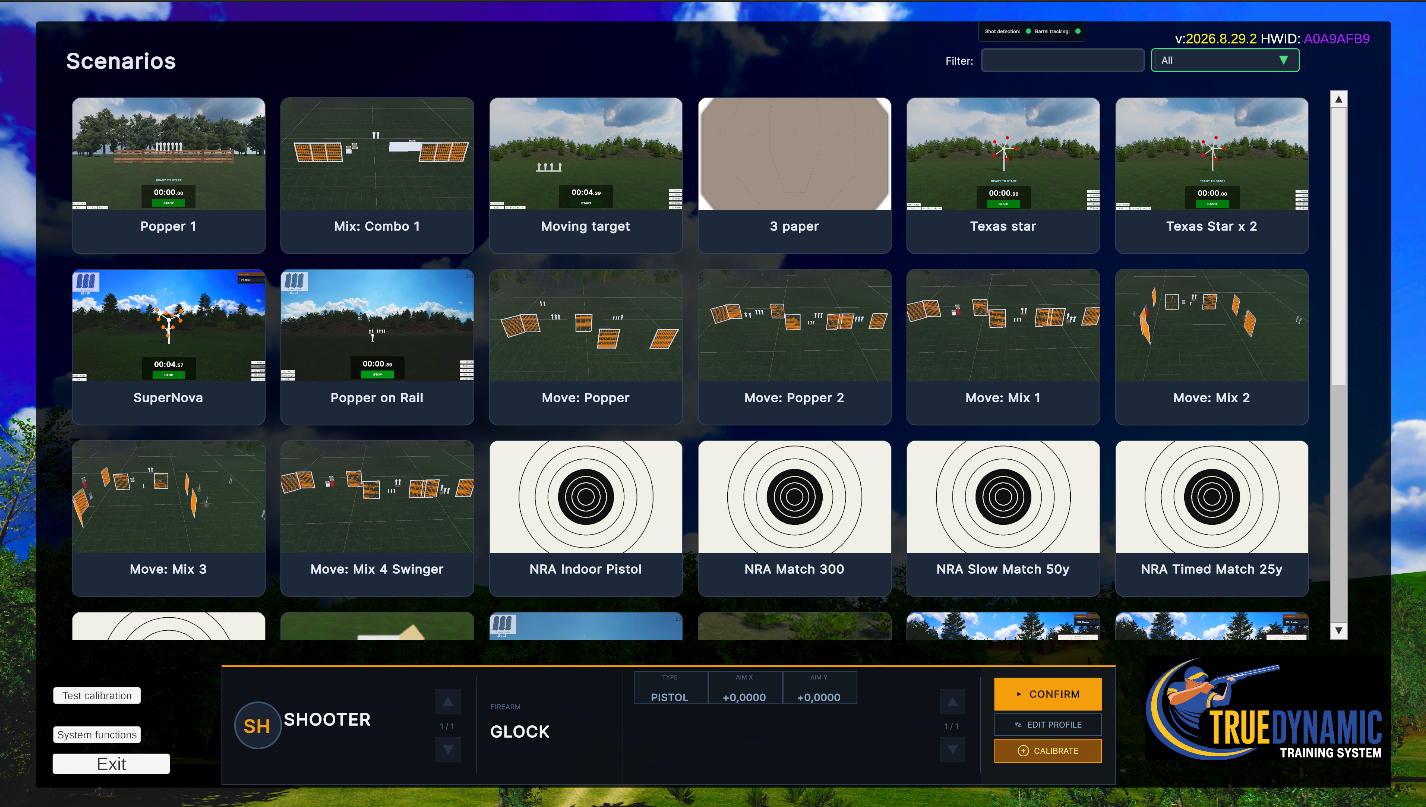
Oltre 20 scenari al lancio — e la libreria continua a crescere.
Allena l'estrazione, il movimento, la decisione
TrueDynamic porta il tiro pratico e dinamico al coperto. Acciaio che cade, carta che ruota e scompare, no-shoot da interpretare in una frazione di secondo — il tutto con balistica reale, non con hit box preimpostate.
E quando vuoi rallentare tutto, lo stesso sistema gestisce gare complete di pistola di precisione NRA e ISSF, con punteggio secondo regolamento.
Ogni colpo è un proiettile reale. Velocità alla volata, coefficiente balistico e peso della palla sono presi dalla munizione che hai scelto e calcolati con un modello completo di resistenza aerodinamica — così distanza, caduta e tempo di volo si comportano come su un campo reale.
Se sbagli alto a 40 metri in TrueDynamic, avresti sbagliato alto a 40 metri anche all'aperto.
Progettalo, percorrilo, stampalo
Crea i tuoi stage
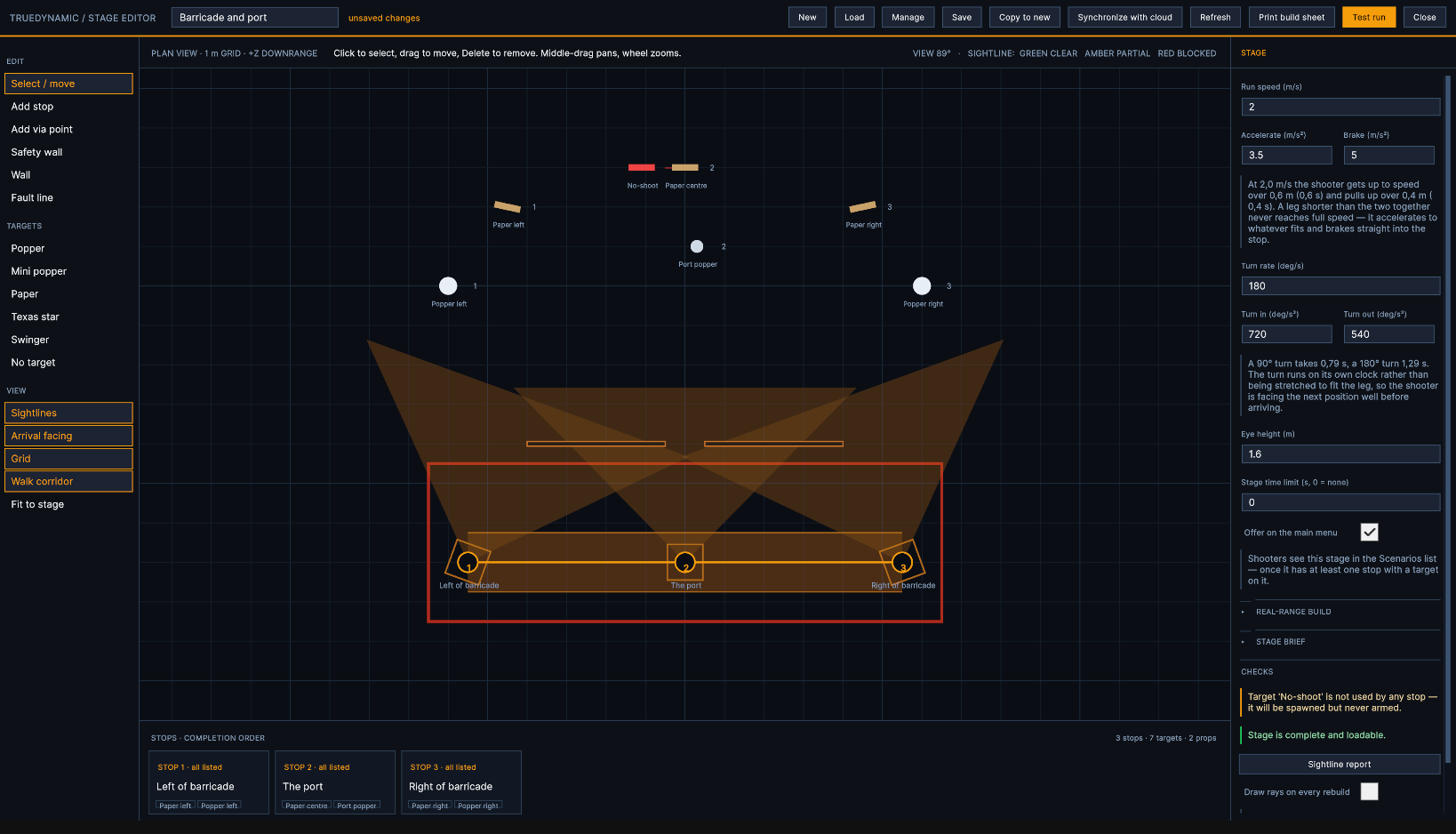
La libreria di scenari è un punto di partenza, non un limite. TrueDynamic include un editor di stage completo all'interno del sistema stesso — nessuna applicazione separata, nessun software di modellazione, niente da installare. Disegna un percorso in pianta, guardalo comparire in 3D accanto a te, sparalo e stampa la scheda che serve a un club per costruire lo stesso percorso sul campo reale.
È lo stesso editor che usiamo noi per realizzare gli stage inclusi nel prodotto. Non ci teniamo nulla per noi.
Postazioni di tiro
Posiziona ogni postazione e la direzione verso cui il tiratore vi arriva. Assegnale un riquadro di tiro e stabilisci cosa deve accadere prima che il tiratore possa lasciarla — tutti i bersagli elencati abbattuti, un numero prestabilito di impatti, oppure un tempo par.
Il percorso
Le postazioni sono collegate da un percorso a piedi, con punti di passaggio dove il tracciato deve aggirare un muro. Per ogni postazione: la velocità di avvicinamento, e da che parte il tiratore ne esce ruotando — a sinistra, a destra o dalla parte più breve.
Bersagli e strutture
Carta, popper, mini popper, swinger, una Texas Star, no-shoot — trascinati dalla barra direttamente sulla pianta. Muri, barricate e scenografie si dimensionano al metro e stabiliscono cosa si può vedere e da dove.
Linee di fault
Clicca sugli angoli e le assi vengono posate tra di essi, agganciate a 45° e a mezzi metri — tieni premuto Shift per qualsiasi angolo su una griglia da 5 cm. Oppure genera un perimetro attorno all'intero percorso e trascinalo nella forma che vuoi.
È in funzione mentre lo costruisci
La pianta da un lato, lo stage vero e proprio dall'altro. Sposta un muro e si sposta nel mondo; rilascia un bersaglio ed è già lì in piedi. Non c'è nessuna fase di compilazione né anteprima da attendere.
Ogni linea di vista viene verificata al posto tuo. L'editor calcola quanta parte di ogni bersaglio una postazione riesce effettivamente a vedere, e te lo comunica — un popper nascosto dietro il muro che hai appena piazzato viene segnalato mentre lo stai ancora piazzando, anziché essere scoperto da un tiratore a metà stage.
Provalo senza uscire. Un solo pulsante esegue lo stage per davvero, con cronometro, comandi di campo e punteggio. Esc ti riporta nell'editor, esattamente dove eri.
Il tiratore lo percorre davvero
Movimento
- Accelerazione, frenata e velocità di rotazione sono parametri dello stage, non un'animazione fissa. Il tragitto a piedi tra due postazioni dura esattamente quanto deve.
- La testa si gira gradualmente e arriva sull'orientamento nello stesso istante dei piedi, così ciò che stai per ingaggiare è già nell'inquadratura mentre entri.
- La direzione di rotazione la imposti tu. Una postazione che va lasciata girando a destra si lascia girando a destra, anche quando il senso opposto è più breve.
Spara in avanti e continua a muoverti
Ingaggio libero
- I bersagli restano attivi per tutto l'esercizio. Batti l'acciaio della postazione quattro dalla postazione due e il tiratore non si ferma alla quattro — il percorso prosegue a tutta velocità.
- Ripulisci una postazione mentre ci entri e l'avvicinamento si chiude lì per lì, portando la propria velocità nel tratto successivo. Niente frenate fino a fermarsi per poi ripartire.
- Ed è proprio questo il senso di un piano di esercizio: la via più veloce è una decisione del tiratore, e il percorso la premia.
Dallo schermo al campo
Un esercizio progettato qui non resta confinato qui. Ogni esercizio stampa una scheda di montaggio — una sola pagina autosufficiente con il disegno in pianta, una fotografia dell'esercizio finito e i numeri che servono a una squadra per tracciarlo sul terreno reale.
Tutto è misurato da un unico picchetto di riferimento nella prima postazione: distanze e scostamenti dei bersagli, tavole delle fault line angolo per angolo, posizioni e angoli delle pareti e un ordine di montaggio che indica cosa posizionare per primo e cosa verificare prima di fissarlo a terra. Consegnala a un club e potranno costruire il tuo esercizio la mattina e spararlo il pomeriggio.
Parti da un classico, conservalo, condividilo
Modelli. El Presidente, una feritoia su barricata, una sequenza di piatti, uno swinger e una star, un percorso in campagna. Aprine uno, cambia ciò che vuoi, salvalo come tuo.
Gli esercizi sono file. Salvali, duplicali, eliminali e sincronizzali tra i tuoi sistemi tramite il cloud — un esercizio costruito su una macchina può essere sparato su un'altra.
I punteggi restano onesti. Sposta una parete o cambia un orientamento e il percorso non è più lo stesso. TrueDynamic se ne accorge, assegna all'esercizio una nuova revisione e chiede se la vecchia classifica debba seguirlo — così un hit factor non viene mai confrontato con un percorso che nessuno può più sparare.
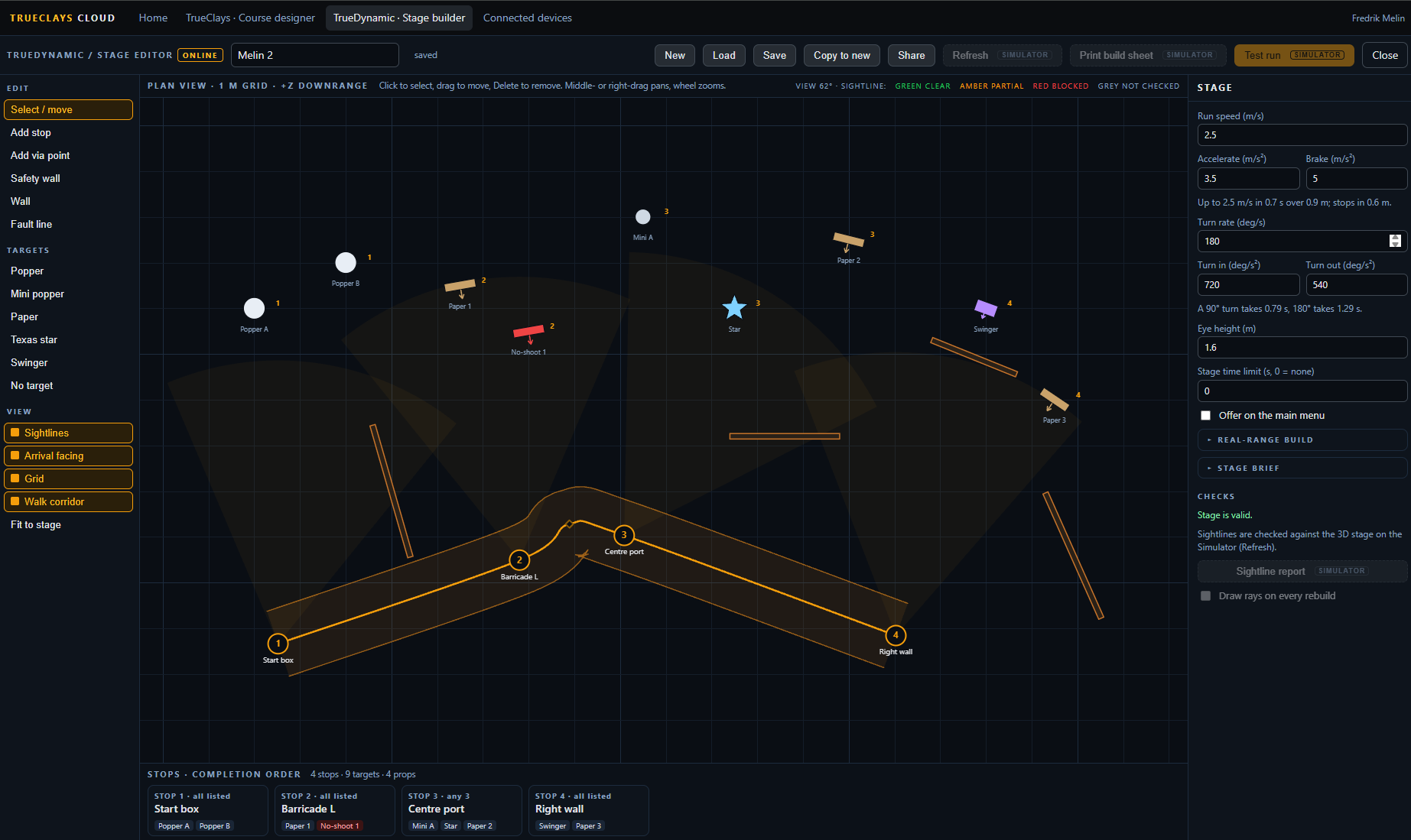
Progetta a casa, spara al campo
Anche lo Stage Builder è online
Il builder non è legato alla macchina in piazzola. Accedi a cloud.trueclays.com da qualsiasi browser e ritrovi lo stesso editor — la vista in pianta, la barra dei bersagli, le pareti, le fault line, il brief dell'esercizio e i controlli. Progetta una gara sul divano giovedì e sparala sabato.
È lo stesso file di esercizio a entrambi i capi. Niente viene esportato, convertito o appiattito lungo il tragitto.
La tua libreria, ovunque
Gli esercizi risiedono nel tuo account oltre che sul Simulatore. Aprine uno su un portatile, continua a costruirlo, e sarà ad attenderti al campo alla prossima sincronizzazione.
Modelli e versioni viaggiano con te
Gli stessi modelli da cui partire, lo stesso marcatore di versione su ogni esercizio. Cambia ciò che il tiratore deve fare e la versione si aggiorna online esattamente come sul Simulatore.
Ciò che richiede il campo resta al campo
I controlli delle linee di vista, la prova di percorrenza, "visualizza questa posizione" e la scheda di montaggio stampata richiedono tutti l'esercizio 3D. Online sono mostrati ma disattivati, così sai che cosa ti aspetta in piazzola.
Un solo pulsante li mantiene allineati
Sincronizza con il cloud, nel generatore del Simulatore. Uno stage presente in un solo punto viene copiato senza chiedere conferma. Uno stage presente in entrambi, e diverso, non viene mai sovrascritto in silenzio: ti vengono mostrate entrambe le copie con l'ora di salvataggio di ciascuna e ti viene chiesto quale conservare — oppure se conservarle entrambe.
Nessun dato viene mai eliminato da una sincronizzazione, in nessuna delle due direzioni, e viene eseguita solo quando qualcuno preme il pulsante. Collegare un Simulatore richiede una sola approvazione, una volta sola:
- Premi Sincronizza con il cloud e digita l'email con cui accedi.
- Un codice come GHOST-7742 compare sul Simulatore e un banner compare sul sito web.
- Verifica che i codici corrispondano, premi Approva, e quel Simulatore resta collegato finché non lo scolleghi.
Invia uno stage a chiunque, con un codice
Il direttore di gara costruisce lo stage; ogni club che lo spara riceve un codice. Premi Condividi su uno stage online e ottieni qualcosa come STAGE-7K4QM-2XD9P — abbastanza breve da poterlo dettare al telefono.
Sul loro Simulatore: Sincronizza con il cloud → Ottieni con codice. Lo stage arriva e si apre, pronto per essere eseguito. Quel Simulatore non deve essere collegato ad alcun account, così un cliente può entrare in un campo pubblico con un codice e sparare il proprio stage sulla macchina di qualcun altro.
Un codice contiene quel solo stage, esattamente com'era nel momento in cui il codice è stato creato — nient'altro della tua libreria, e nessuna via di ritorno verso il Simulatore che lo ha usato. I codici durano un giorno, una settimana o un mese, possono essere monouso e possono essere revocati nel momento in cui cambi idea.
La potenza del motore: balistica reale, configurazioni reali
TrueDynamic è basato sullo stesso TrueClays Engine che alimenta i nostri simulatori di tiro a volo e di caccia. Nulla del tuo colpo è approssimato: il proiettile viene calcolato dal momento in cui lascia la volata.
Le tue munizioni
Velocità alla volata, coefficiente balistico e peso della palla per ogni cartuccia, simulati con un vero modello di resistenza aerodinamica.
La tua arma
Crea una configurazione per ogni arma con il proprio azzeramento. Cambiando l'arma predefinita cambia l'intera impostazione.
Il tuo profilo
Mano dominante, divisione e dettagli di gara ti seguono, sulla macchina e nel cloud.
Stage che non si ripetono mai
- ✔ Layout randomizzati: il numero di bersagli e di no-shoot cambia da una sessione all'altra.
- ✔ Ritardo di partenza casuale: nessuna possibilità di anticipare il beep.
- ✔ Esposizione regolabile: imposta per quanto tempo un bersaglio resta presentato.
- ✔ Posizioni multiple: affronta lo stesso stage da angolazioni diverse.
Un punteggio su cui discutere
- ★ Punteggio a zone: ogni colpo viene localizzato e valutato sulla sagoma.
- ★ Penalità no-shoot: colpire il bersaglio sbagliato ti costa caro.
- ★ Tempo e hit factor: la velocità conta solo se ci sono i punti.
- ★ Riepilogo dello stage: analisi completa nel momento in cui lo stage termina.
Un campo pieno di bersagli
Più di venti scenari disponibili al lancio, costruiti a partire da una gamma di tipologie di bersaglio che si comportano esattamente come le loro controparti in acciaio e cartone.
Bersagli girevoli
Sagome di carta che si presentano, restano esposte e si nascondono a comando: colpiscile prima che spariscano.
Popper
Acciaio che cade quando viene colpito e resta giù fino al reset dello stage.
Plate rack
Abbatti tutte le piastre una volta, o due, prima che il cronometro si fermi.
Swinger
Acciaio attivato che continua a muoversi mentre spari.
Spinner & SuperNova
Acciaio zavorrato che va fatto ruotare completamente. Il nostro spinner SuperNova è il bersaglio più difficile del campo, e non gli importa quanto in fretta ci sei arrivato.
Mover
Bersagli che si spostano lungo un percorso, all'altezza e alla velocità di quelli reali.
Peek target
Una testa che compare accanto a un pannello no-shoot. Leggi la situazione in fretta, o trattieni il colpo.
Scenario con veicolo
Un veicolo in movimento che rallenta solo quando viene colpito il bersaglio giusto.
No-shoot
Posizionati in modo casuale, chiaramente contrassegnati, implacabili.
Bersagli di precisione
Sagome ufficiali NRA e ISSF, valutate secondo le reali tabelle di punteggio degli anelli. Vedi sotto.
Sul campo, nella stanza
Il range officer è incluso
TrueDynamic gestisce uno stage esattamente come farebbe un vero range officer. Comando di pronto, standby, un segnale di partenza che non puoi prevedere, poi il cronometro, i colpi e il comando di stop.
Le discipline di precisione hanno i loro protocolli. L'NRA bullseye esegue la sequenza vocale fino a "ready on the firing line"; l'ISSF esegue LOAD e ATTENTION, poi ti fa partire come fa un vero campo — con il bersaglio che si gira frontalmente, e nessun segnale acustico.
Novità al lancio
Pistola di precisione olimpica e bullseye
La stessa sala che gestisce una fase pratica gestisce un'intera gara di precisione. Visuali ufficiali, tabelle ufficiali degli anelli, programmi di tiro ufficiali — e i comandi di campo e la cronometrazione che li accompagnano.
Il punteggio è analitico, non un'immagine. Ogni colpo è misurato come raggio dal centro del bersaglio sulle dimensioni reali stampate, così un dieci al limite viene deciso come lo deciderebbe un bersaglio elettronico — non da come è stata disegnata la grafica.
NRA Precision Pistol
Indoor 50 ft & outdoor
- National Match Course — 10 slow, 10 timed, 10 rapid. 300 punti.
- Match Slow, Timed e Rapid Fire — i tre match da 200 punti dell'aggregato 900, tirati singolarmente.
- B-2 e B-3 indoor a 50 piedi; B-6 a 50 yard e B-8 a 25 yard outdoor, con il bersaglio che si muove tra una fase e l'altra.
- Punteggio line-cutter e spareggi a conteggio X, come prevede il regolamento.
Pistola ISSF
Discipline olimpiche
- Pistola ad aria compressa 10 m — 60 colpi, preparazione e prova, poi tiro di gara al proprio ritmo.
- Pistola 50 m e Pistola standard 25 m — serie da 150, 20 e 10 secondi.
- Pistola automatica 25 m — cinque bersagli girevoli a interasse 75 cm, un colpo su ciascuno, in 8, 6 e 4 secondi.
- Anelli interi o decimali — punteggio di qualificazione e di finale, con spareggi al dieci interno.
Modalità Precisione
L'anello del dieci di una pistola ad aria compressa a dieci metri misura 11,5 millimetri di diametro. Su un'immagine proiettata è un segno molto piccolo, e vederlo bene è gran parte della disciplina.
La Modalità Precisione affronta il problema direttamente: il sistema lavora a risoluzione più alta e il tiratore si posiziona più lontano dallo schermo, con il campo visivo ricalcolato di conseguenza. La dimensione apparente del bersaglio resta invariata — un anello del dieci sottende esattamente ciò che sottende su un campo reale, quindi la difficoltà e i punteggi restano onesti — ma viene disegnato con circa quattro volte il dettaglio. I punti di mira che erano una macchia diventano un nero pulito e nitido.
I punteggi della Modalità Precisione sono direttamente confrontabili con quelli ottenuti alla distanza normale. Nulla viene reso più facile; è semplicemente rappresentato meglio.
Due modalità di visualizzazione, un solo proiettore. Il tiro dinamico e il tiro di precisione richiedono al display esigenze opposte, perciò TrueDynamic non scende a compromessi tra le due — commuta.
Stage dinamici
1080p a 240 Hz
- Sagome metalliche a caduta, swinger, spinner e bersagli mobili sono tutte questioni di tempismo.
- A 240 fotogrammi al secondo un bersaglio in movimento viene ridisegnato ogni quattro millisecondi — ciò che vedi è dove si trova.
- Nulla in uno stage pratico è tanto piccolo da richiedere più pixel di così.
Gare di precisione
4K a 60 Hz
- Un bersaglio di precisione non si muove, quindi il frame rate non porta alcun vantaggio.
- Lo stesso budget hardware viene destinato alla risoluzione: quattro volte i pixel sulla faccia del bersaglio.
- I bordi degli anelli e i punti di mira si risolvono come linee nette anziché come gradini sfumati.
Le due modalità costano al sistema quasi esattamente lo stesso: entrambe muovono circa mezzo miliardo di pixel al secondo. Cambia solo la distribuzione — distesi sottilmente su molti fotogrammi rapidi per il lavoro dinamico, concentrati in pochi fotogrammi molto più nitidi per la precisione. È anche il motivo per cui i bersagli mobili non vengono mai offerti in 4K: a 60 Hz uno swinger avanzerebbe a scatti visibili tra un fotogramma e l'altro, e un bersaglio a scatti è peggiore di uno leggermente meno definito.
La commutazione è automatica. Ogni scenario della libreria porta con sé la propria modalità di visualizzazione. Seleziona una gara NRA o ISSF e il sistema cambia il proiettore al posto tuo; torna a uno stage pratico e la modalità torna indietro. Non c'è nulla da configurare né un launcher separato.
Prevedi che il proiettore perda il segnale per un secondo o due mentre si risincronizza sulla nuova modalità — una breve schermata nera tra la selezione dello scenario e l'attivazione della linea di tiro. Si tratta del display che si riaggancia, non del sistema che carica.
Ciò che non cambia è il punteggio. Gli impatti vengono calcolati dalla soluzione balistica e misurati come raggio rispetto alle dimensioni reali stampate del bersaglio, non letti dall'immagine renderizzata. La risoluzione cambia ciò che il tiratore vede; non cambia mai quanto vale il colpo. Un dieci a 1080p è un dieci in 4K.
La Modalità Precisione cambia la posizione da cui spari, quindi la tua arma deve essere calibrata alla distanza della modalità precisione. Uno zero impostato nella posizione standard non è più valido una volta arretrato — ricalibra prima, e il sistema conserverà quello zero con il tuo setup.
Disponibile su richiesta
Scenari di Addestramento per Forze dell'Ordine e Professionisti
Una suite separata di scenari force-on-NPC è disponibile per forze dell'ordine, unità militari e centri di addestramento certificati. Vanno oltre il tiro al bersaglio — gli operatori intervengono in ambienti pubblici interamente simulati, con folle di civili, sospetti armati e decisioni sull'uso della forza da prendere in una frazione di secondo.
Contatta TrueClays per discutere requisiti di accesso, licenze e implementazione per la tua organizzazione.
Come si svolge uno stage
Dal primo comando all'ultimo, la sequenza è quella che già conoscete.
- 1. "Siete pronti?"
- 2. "Attenti" — poi un segnale di partenza in un momento imprevedibile.
- 3. Ingaggio. I bersagli compaiono, cadono e si muovono.
- 4. "Stop." — "Se hai finito, scarica e mostra l'arma scarica."
- 5. Riepilogo dello stage: colpi a segno, zone, penalità, tempo.
Le gare di precisione seguono invece la propria sequenza NRA o ISSF.
In uscita nell'autunno 2026
TrueDynamic arriverà sui sistemi TrueClays nell'autunno 2026, con oltre venti scenari al lancio più le discipline di precisione NRA e ISSF. Contattaci per informazioni su disponibilità, requisiti hardware e accesso anticipato per poligoni e club.
Contatta TrueClays per informazioni